- Heat at the fingertips in under a minute
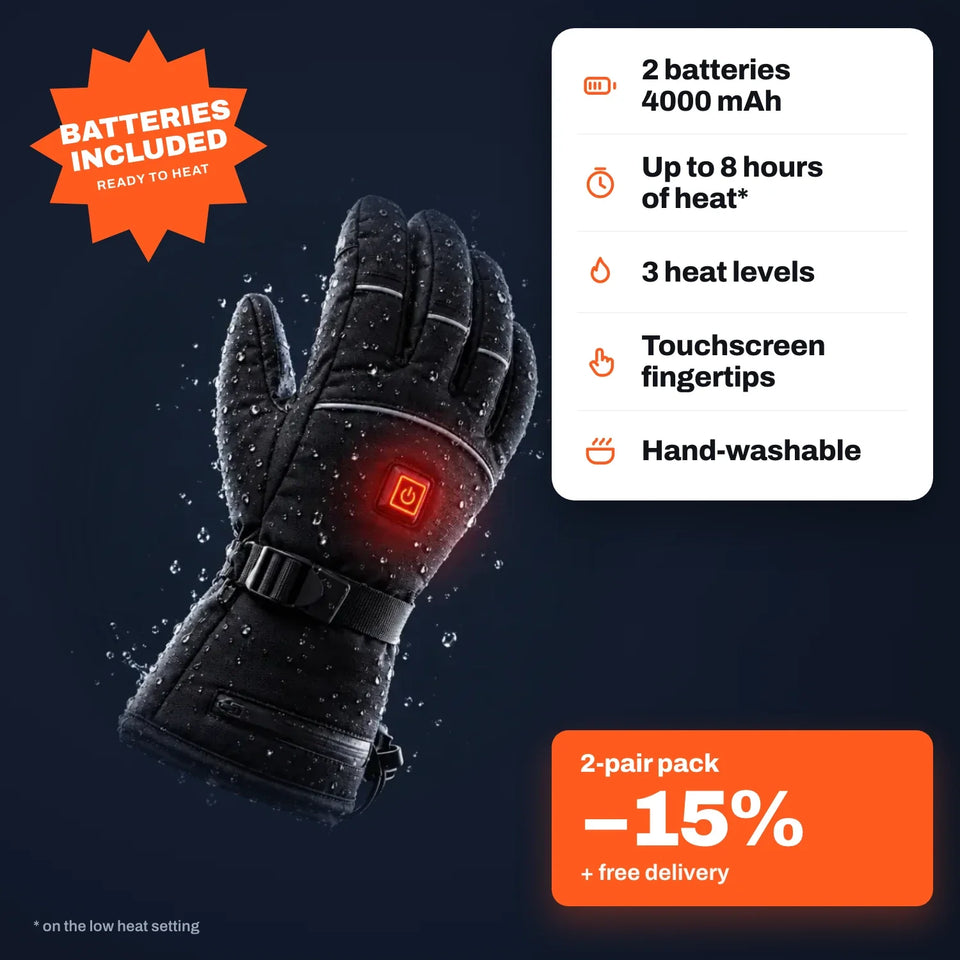
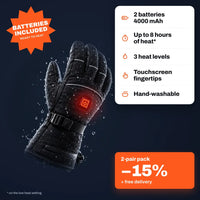
- Up to 8 hours per charge
- 2 × 4000mAh batteries in the box
- Waterproof, windproof shell
- Touchscreen index and thumb
- 30-day returns, worn outdoors is fine
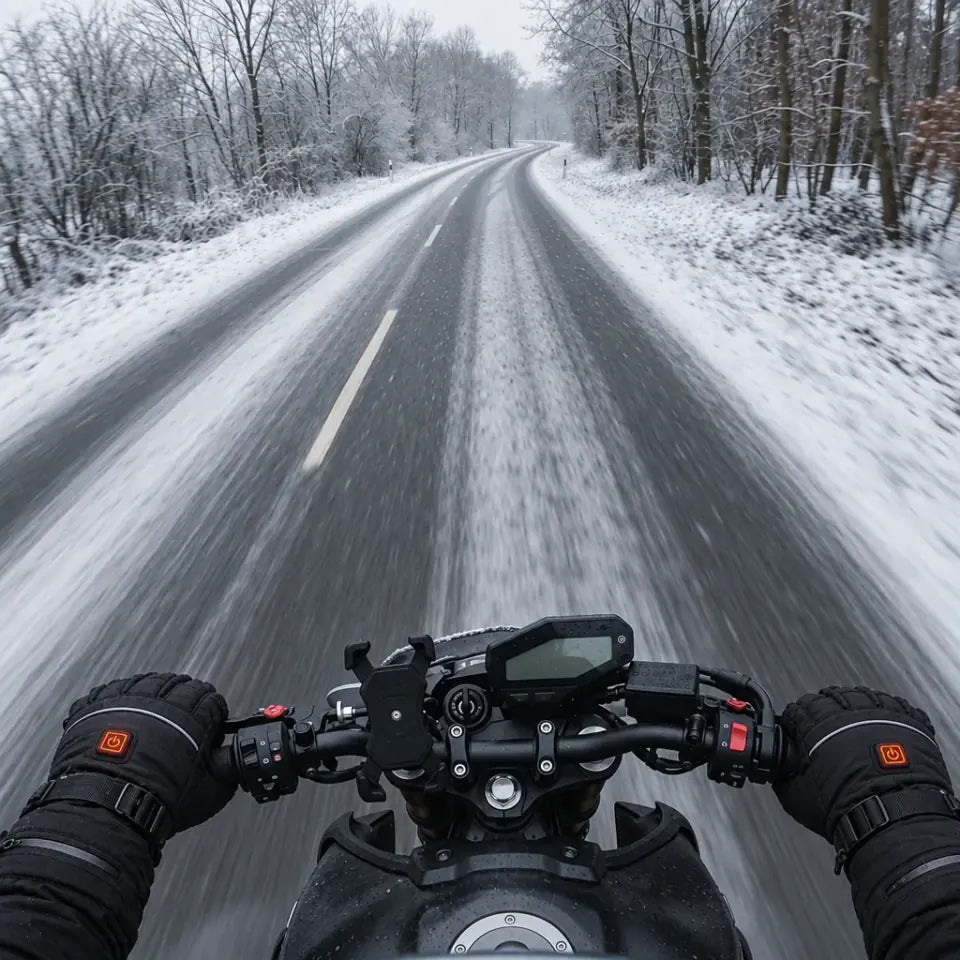
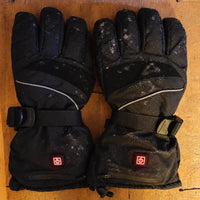
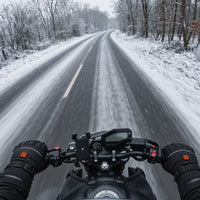
Heated Motorcycle Gloves That Hold Heat At 70mph, In The Rain, For Eight Hours
Rechargeable heated gloves built for winter riding. Three heat settings you can change at a red light, a long cuff that seals over your jacket, and two 4000mAh batteries in the box — one per hand. Free tracked delivery across the UK.
- Heat at the fingertips, where wind chill hits first
- Three settings, changed with a gloved thumb at the lights
- Long cuff seals over a bike jacket sleeve
- Waterproof, windproof shell with sealed seams
- Touchscreen index and thumb for sat-nav and calls
- Two 4000mAh batteries included — one per hand
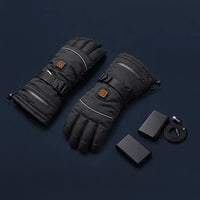
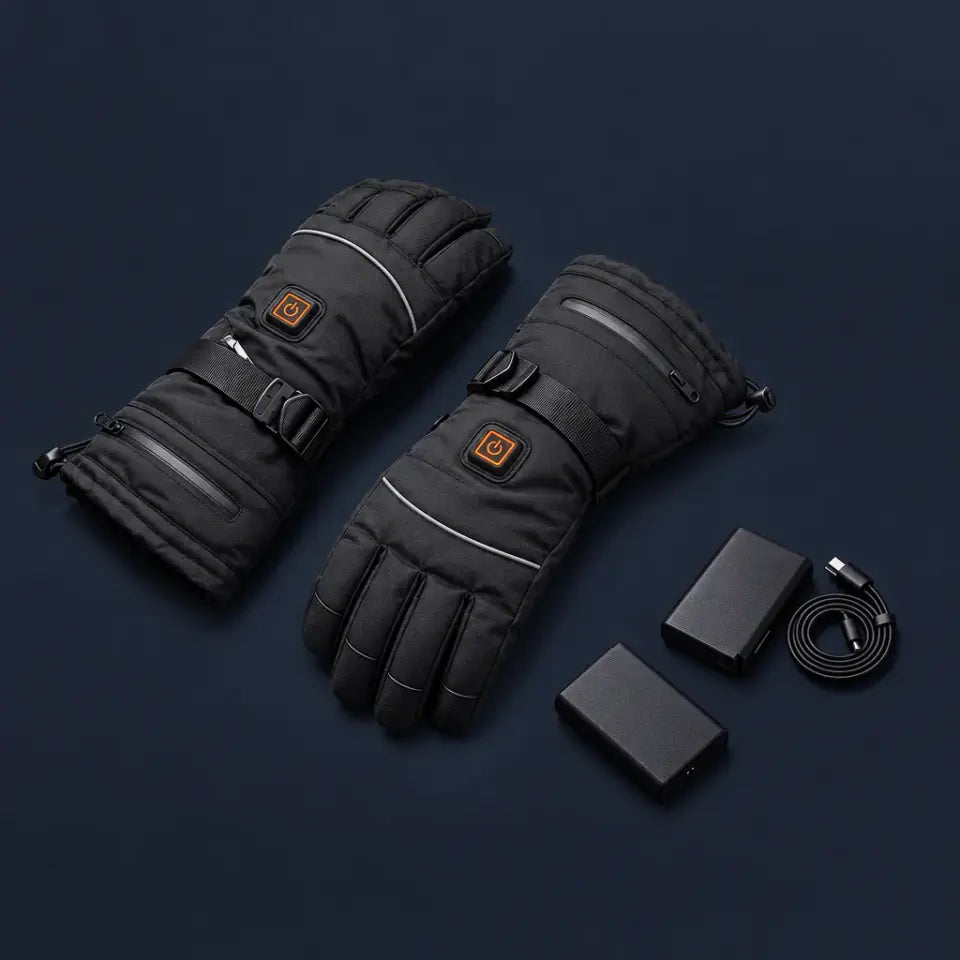
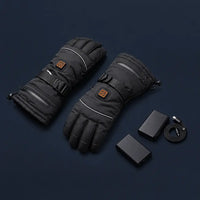
1 pair of heated gloves
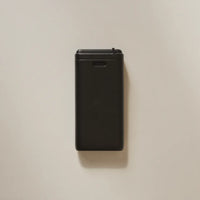
2 × 4000mAh batteries
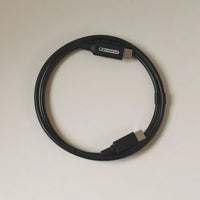
USB-C charging cable
Size help
Measure your palm without the thumb. Between two sizes, take the larger — exchanges are free for 30 days.
2 pairs of heated gloves
4 × 4000mAh batteries
USB-C charging cable
Size help
Two sizes, chosen separately — they do not have to match. Between two sizes, take the larger.
Order before 2pm and it leaves the same working day. Free tracked delivery to the UK in 3–7 working days. You get the tracking link the moment the label is printed.
How is this different from the thick gloves I already own?
A normal glove is a container — it holds the heat your hand is producing and slows the loss. Once your body stops sending warmth out to the fingers, there is nothing left to hold, and the glove is just thickness. These generate their own heat for hours, so there is always something to keep in.
Won’t they be too bulky to do anything?
They’re a winter glove, so yes, thicker than a liner. Riding, skiing, shovelling, site work, walking a dog, handling packages — all fine. Threading a fish hook or typing on a phone keyboard — take them off. We’d rather tell you now than have you return them.
What size do I need?
Measure around your palm, not including the thumb. S 7.4–7.8 in / 18.8–19.8 cm · M 7.9–8.3 in / 20.1–21.1 cm · L 8.4–8.8 in / 21.3–22.4 cm · XL 8.9–9.3 in / 22.6–23.6 cm. Between sizes, size up.
How long does a charge really last?
About 4 hours on high, 6 on medium, up to 8 on low. Two batteries come in the box — one per hand.
Can I wear them in the rain or snow?
Yes. The outer shell is waterproof and windproof with sealed seams. Don’t submerge them, and never put the gloves in a washing machine.
Are they safe to leave on all day?
On medium or low, yes — that is how most people wear them. The element sits between two wadding layers so it never touches skin directly. The top setting reaches 131°F / 55°C, which is warmer than you want against skin for hours at a stretch, so use high to warm up and then drop down. If you have diabetes, neuropathy or any reduced sensation in your hands, speak to your doctor before using any heated garment — you need to be able to feel when something is too warm.
What if they don’t work for me?
Thirty days from delivery, worn outdoors is fine. Email support with the order number and we send the instructions the same working day.
Seen in the wild
What heated gloves look like on a winter ride
Clips showing the settings, the battery pack and the touchscreen tips working in real winter conditions.
Footage of heated gloves of this type, not of our own customers. Our customers' own clips replace these as they come in.
What people say after a real winter
Photographs and words from customers, including the ones who told us what they did not like.
No reviews yet — these have just launched
We will not write our own and we will not import somebody else's. Real customers, real winters, including the unflattering ones.
If this is your winter commute, keep reading
-
Your fingers are numb by the second set of lights, every ride
-
Wind chill at 60mph goes straight through gloves that are fine standing still
-
You've bought thicker winter gloves and lost throttle feel without gaining warmth
-
You stop for coffee you don't want, just to get feeling back in your hands
-
Heated grips warm your palms while your fingertips stay frozen
-
You can't work the indicator or the horn properly once your hands go
-
You take the car on cold mornings and resent it

Here’s the part nobody selling you a thicker glove will say: every one of those products failed at the same moment — the moment your body stopped sending warmth to your hands in the first place.
You've tried these on the bike. Here's why they couldn't work.

Thicker winter gloves
Bulk kills throttle and brake feel long before it keeps your hands warm. At speed the wind strips heat out faster than insulation can hold it.

Disposable hand warmers
They slide around inside a glove, land on the palm rather than the fingers, and are dead before a long ride is over.

Glove liners
Another layer between you and the bars. Less feel, less room, and still no heat source once your hands shut down.

Heated grips
They warm the palm side only. The backs of your fingers take the full wind blast and that is where the cold gets in.

Bar muffs
They work, and they also hide your controls, catch crosswinds and look like you've given up.
It isn't the cold. It's the wind doing the work.
When your core temperature starts to drop, your body does something sensible and completely unhelpful: it narrows the blood vessels in your hands and feet and redirects that blood to your heart, lungs and brain. It’s called peripheral vasoconstriction, and it’s why fingers and toes go numb long before your chest is cold.
So the hand isn’t losing a fight against the weather. It’s being quietly defunded by your own circulation. And a glove — any glove — is only ever a container for heat that your hand has already stopped receiving.
Standing still at 32°F / 0°C your gloves cope. Pull onto a dual carriageway at 70mph and the same gloves fail within minutes, because moving air strips heat off a surface far faster than still air does. That is wind chill, and on a bike you generate it yourself for the entire ride.
At the same time your body is reacting to the cold by narrowing the blood vessels in your hands to protect your core. So the supply of warmth drops at exactly the moment the wind increases the loss. No amount of padding fixes an equation like that.
Which is why the heat has to come from the glove
Add a powered element and the sum changes. The wind still takes heat away, but there is a constant supply replacing it — so your fingers keep working the levers for the whole ride instead of the first twenty minutes.
The ThermaCore heating system
Carbon-fibre filaments, thin enough to bend with your hand, routed the full length of every finger and across the back of the glove — then sealed between two thermal layers so nothing rubs and nothing gets wet.

-
Heat where the wind hits
Carbon-fibre elements run to the end of every finger and across the back of the hand — the surfaces taking the airflow, not the palm resting on a warm grip.
-
A button you can press at the lights
Raised, colour-coded, one gloved thumb. No app, no phone out of your pocket in the rain, nothing to pair before you set off.
-
Two batteries, one per hand
4000mAh each, four hours to charge from USB-C. A commute each way plus the ride home on low, then charged again overnight.
Charge. Clip in. Ride.

Battery into the cuff, before you kit up
Both batteries charge from any USB-C plug in about four hours. Each one clips into the zipped pocket on its own cuff and sits flat under a jacket sleeve.
Set the heat at a standstill
One press for high, again for medium, again for low. Colour-coded so a glance tells you where you are. Choose your setting before you pull away, not mid-corner.
Ten minutes on high, then drop to low
High warms your hands through on the first stretch. Low from then on, and the charge carries a commute each way with room to spare.
Nothing here is decoration
Fingertip-length elements
Heat reaches the last joint of every finger, not just the back of the hand. That is the difference between warm hands and hands that are warm in the wrong place.
One-hand button
Raised enough to find through a glove, colour-coded so a glance tells you which setting you’re on. No app, no pairing, no phone out in the wind.
Touchscreen index & thumb
Conductive thread woven in, not a rubber dot glued on. Answer a call, check the map, scan a label, keep the glove on.
Long cuff and cinch strap
Covers the wrist gap a jacket sleeve leaves open — the gap that lets cold air run straight up your arm on a bike.
Reinforced grip palm
Textured panels across the palm and fingers so handlebars, tools and loading bars don’t slide — wet or dry.
Zipped battery pocket
On the cuff, out of the way of the wrist joint, closed against snow. Unzip, unclip, swap in a spare in about ten seconds.
Six things worth knowing before you ride in them
If a page only tells you what a product does well, it isn't telling you enough to decide.
Four hours on high is real
Not eight. Eight is the low setting. On a long winter ride expect three to four hours at the top setting — which is why two batteries come in the box.
Set the heat before you pull away
The button is easy to find with a gloved thumb, but it is still a button. Choose your setting at a standstill, not mid-corner.
Bulkier than a summer glove
Fine for throttle, brake and clutch. Poor for fiddly work at the roadside. There is no heated glove on the market that is both.
The battery sits on the cuff
Out of the way of the wrist joint and under a jacket sleeve. If you wear a watch on that wrist, plan to move it.
They are not CE-rated armour
These are heated gloves, not certified impact protection. If you need CE Level 1 or 2 for your riding, wear these for commuting and keep your armoured pair for the rest.
Waterproofing holds up
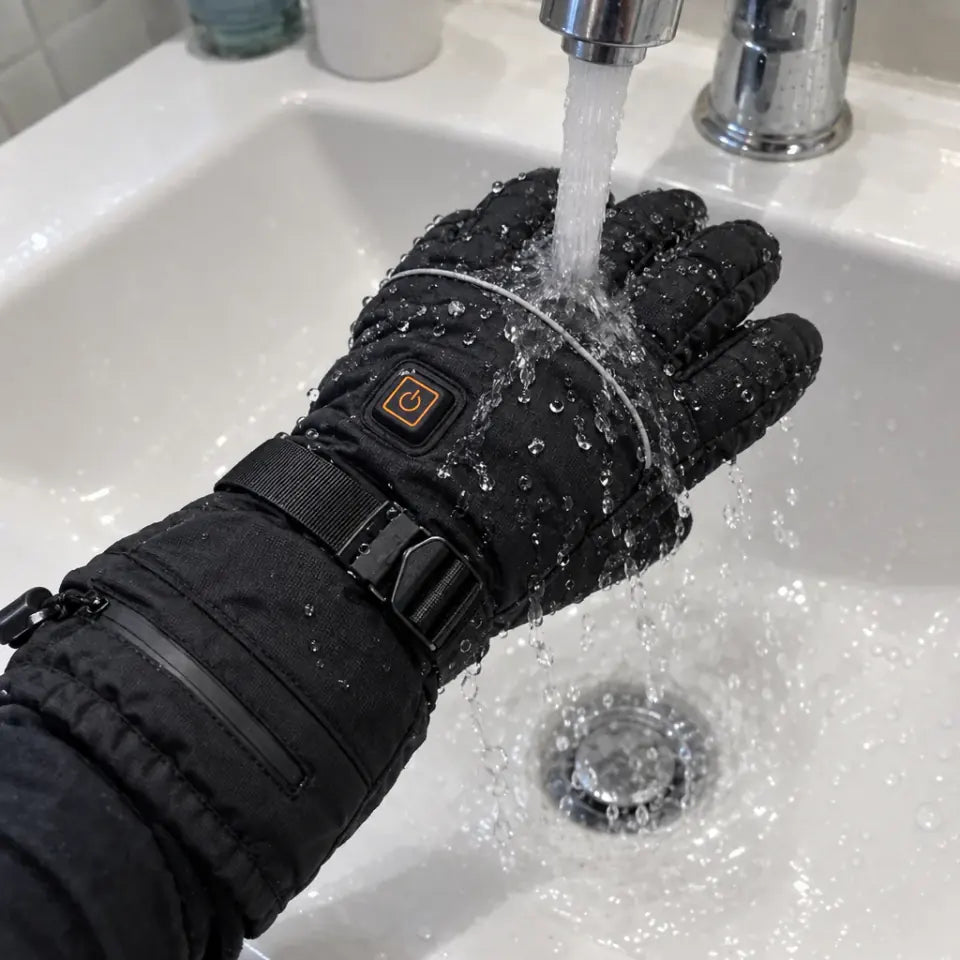
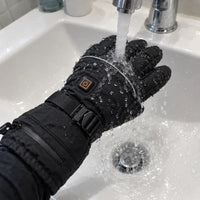
A minute under a running tap, lining bone dry inside. Don't submerge them and never machine-wash the gloves.
From the box to the end of the season
You feel it before you believe it
Battery in, one press, and the warmth arrives at the fingertips while you’re still standing in the hallway. Most people press the button twice to check it’s real.
You stop planning around your hands
No pre-warming the car, no counting how long you can be outside, no shoving your hands under your arms at the first traffic light.
You settle on low
High for the first ten minutes, low for the rest. That’s the pattern almost everyone lands on, and it’s where the all-day battery figure comes from.
The box of packet warmers goes stale
It stays in the drawer all winter. Come spring you charge the batteries to about half, put the gloves away, and they’re ready when it turns again.
Every hand is different. Some people never leave the medium setting; some run low all day. What doesn’t change is that the heat comes from the glove instead of from a hand that has already given up.
Winter stops deciding whether you ride
-
The commute you actually ride. Not the one where you take the car from November to March.
-
Full feel on the levers, all the way home. Brake and clutch inputs that are yours, not whatever your numb fingers manage.
-
Motorway stretches without the countdown. No working out how many junctions you can manage before the next stop.
-
Cold, bright Sunday mornings. The best riding weather of the year, and the reason most people stop riding in it is their hands.
-
Walking into work without the ten-minute thaw. Which is a smaller thing than the others, and the one riders mention most.
Heated gloves vs. heated grips and everything else
 The Warm Chapter
 Heated grips
Five things worth checking, whichever heated gloves you buy
Heated gloves run from under £25 / $30 to over £150 / $190 and they are not the same product. These are the five specs that decide whether a pair actually keeps your fingers warm — ours are listed so you can hold any other pair to the same test.
Do the elements reach the fingertips?
Most budget pairs heat the back of the hand and stop at the knuckle. The fingertip is the part that goes numb first, so that is the part that has to be heated. Ours run to the last joint of every finger.
How many batteries, and what capacity?
One battery means one warm hand or half the runtime. Check the mAh too — 2000mAh is common at the low end. Ours is two 4000mAh batteries, one per glove, included rather than sold separately.
Sealed seams, or a sprayed-on coating?
A spray-on water repellent washes off within a season. Sealed seams do not. If the listing says 'water resistant' rather than naming the construction, assume the former.
Is the runtime quoted on high or on low?
An '8 hour' headline is almost always the lowest setting. Ask what you get on the top setting. Ours is about four hours on high, six on medium, eight on low — and we print all three.
Can you work the button wearing them?
A flush button you cannot find through a glove, or an app that needs your phone out in the wind, is a button you will stop using. Ours is raised, colour-coded and works with a gloved thumb.
What happens after the return window?
This is the one most listings never answer. Ask for the warranty on the heating elements and on the batteries separately — they fail at different rates and are covered differently.
What happens if something fails in February
A 30-day return answers whether you like them. It does not answer the question people actually have about a powered garment, which is what happens in the middle of the season when a finger stops heating.
Covered for 12 months on the heating elements
If an element stops heating, a seam opens or the controller fails inside the first year of normal use, we replace the glove. You do not pay return shipping on a fault.
Six months on the batteries
Batteries are consumables and they lose capacity with every cycle — that is chemistry, not a defect. What we cover is a battery that will not hold a charge, or will not charge at all, inside six months. Spare batteries stay available to buy for as long as we sell the gloves.
What is not covered
Tears from catching them on something, damage from machine washing or submerging them, and the gradual capacity loss any lithium battery shows after a season of use.
Judge them on a cold ride, not in the hallway
You have already paid for the thicker pair, the liners and the box of warmers. You should not have to spend on faith again, so this time you don't.
Wear them for a full 30 days. Ride in them, get them wet, run a battery flat on a motorway run. If they don't change your winter, send them back.
-
Worn outside is fine
Using them is the test. It doesn’t void the return.
-
One email, same-day reply
Order number to support, instructions back the same working day.
-
Wrong size? Free swap
Exchanges are free inside the same window.
Because the thing we actually worry about is the wrong size, not the wrong product — and that is something we can fix for you in one email.
Full terms on the returns page. Wrong size? Exchanges are free inside the same 30 days.
Heated motorcycle gloves — your questions
How warm do they actually get?
131°F / 55°C on high, 122°F / 50°C on medium, 104°F / 40°C on low. Warm enough that you’ll drop to low within ten minutes most days.
How long do they take to charge?
Roughly four hours from flat, on any USB-C charger. The indicator turns green when they’re done.
Are these good enough for daily winter riding?
That is what they are built for — a long cuff that seals over a jacket sleeve, a windproof shell, and a button you can work with a gloved thumb at a red light. They are not CE-certified for impact protection, so if your riding needs armour, treat these as your cold-commute glove rather than a replacement for a certified pair.
Will they work for skiing or snowboarding?
Yes. The cuff goes over or under a jacket sleeve, the palm grips a pole, and low setting covers a full day on the mountain.
How do I clean them?
Take the batteries out, wipe the shell with a damp cloth and let them air dry away from direct heat. Never machine-wash or submerge the gloves.
Shipping and returns?
Free tracked delivery to the US and UK; orders before 2pm MT leave the same working day. Returns accepted within 30 days of delivery, worn outdoors included.
Can I take them on a plane?
Yes, but the batteries must travel in your carry-on, never in checked luggage — that is an airline rule for every lithium battery, not something specific to us. At 4000mAh they are far below the 100Wh limit, so no airline approval is needed. Take them out of the cuff pockets before you check a bag.
I'm buying these as a gift — what about the return window?
The 30 days run from delivery, which does not help if you buy in November for Christmas. Email us with the order number and we will extend the window to 30 days from 25 December instead. Tell us at the time of ordering and we will note it on the order so nobody has to argue about it in January.
How do I keep them fresh over a whole season?
They cannot go in the machine, so the routine is: pull the batteries, turn the cuffs back and let them air somewhere warm but not hot after a wet or sweaty day. A damp cloth on the shell handles road grit. If the lining starts to smell after months of daily use, a light spray of fabric freshener inside and a full day of air drying sorts it. Never put them on a radiator — direct heat damages the element.
Do the batteries last as long in really deep cold?
No, and anyone who tells you otherwise is guessing. Lithium cells lose capacity as the temperature drops — below about 14°F / −10°C expect noticeably less than the figures on this page. The runtime we quote is measured in ordinary winter conditions, not an Arctic expedition. If you work outdoors in deep cold, plan on the spare battery pair rather than hoping.
Can I still buy batteries for these in two years?
Yes. Spare batteries are a stocked product in their own right and stay available for as long as we sell the gloves. Batteries are the part that wears out — a glove you cannot re-power in year three is a glove you have to replace, which defeats the point of buying these instead of disposables.
Who actually are you?
The Warm Chapter is a trading name of Knock Knock Digital LLC, 608 Rio Grande Ave, Santa Fe, New Mexico. We are new — this is our first winter selling these, which is why you will not find years of reviews. What we can offer instead is a real address, a real phone number, a 30-day window that accepts gloves you have worn outdoors, and a page that tells you what these are bad at as well as what they are good at.